

FOUNDERS:
JORDAN AND VERA
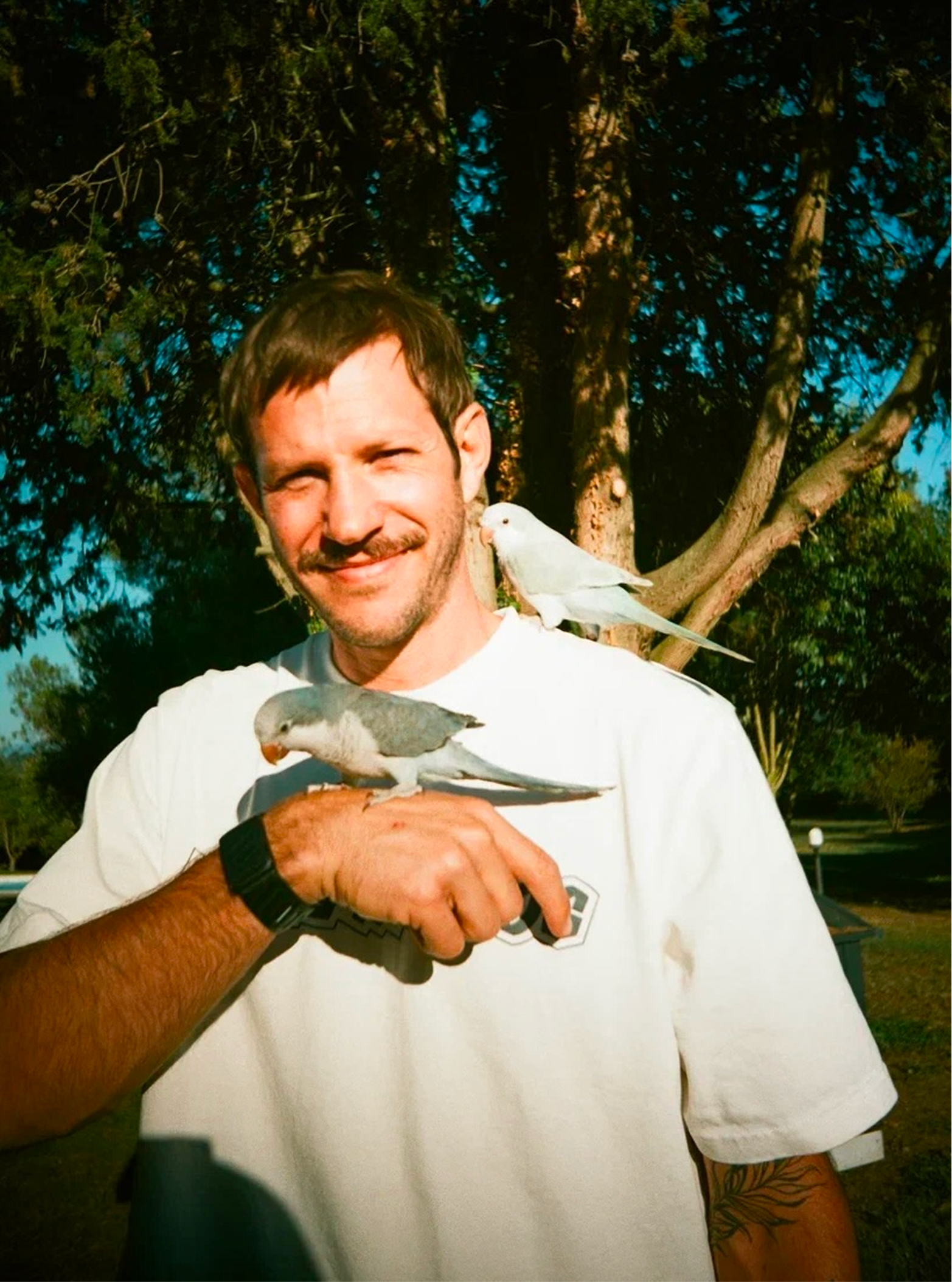

JORDAN IS A SUSTAINABLE TEXTILE DESIGNER AND REGENERATIVE FARMING CONSULTANT, WITH YEARS OF EXPERIENCE SUPPORTING REGENERATIVE ORGANIC COTTON PROJECTS ACROSS MULTIPLE CONTINENTS. VERA IS A FASHION DESIGNER AND FOUNDER OF SORELLE ERA, KNOWN FOR MODERN DESIGN, CRAFTSMANSHIP, AND A STRONG CREATIVE POINT OF VIEW.
ERAVA IS WHERE OUR WORLDS MEET: DESIGN AND AGRICULTURE, CRAFT AND NATURE, PRECISION AND SOUL.

THE STORY
BEHIND THE BRAND
FASHION WILL ALWAYS BE PART OF WHO WE ARE. OVER TIME, WE FOUND OURSELVES CRAVING MORE BALANCE, SOMETHING CALMER, MORE GROUNDED, AND MORE CONNECTED TO NATURE.
COFFEE BECAME THAT BRIDGE. IT IS A DAILY RITUAL SHARED ACROSS CULTURES, AND IT CARRIES THE SAME SENSE OF CRAFT AND A EMOTION WE ONCE FOUND IN CLOTHING, WITHOUT NEEDING CONSTANT CHANGE TO FEEL MEANINGFUL.
BEFORE ERAVE, JORDAN SPENT YEARS WORKING ALONGSIDE REGENERATIVE ORGANIC COTTON PROJECTS ACROSS TURKEY, INDIA, THE UNITED STATES, AND SOUTH AMERICA, HELPING FARMS MOVE BEYOND CONVENTIONAL, AND EVEN BASIC ORGANIC, INTO TRUE REGENERATION. WHAT WE SAW WAS SIMPLE: WHEN SOIL COMES BACK TO LIFE, EVERYTHING IMPROVES. CROP QUALITY, FARM RESILIENCE, AND THE WELL BEING OF FARMING COMMUNITIES.
WHEN WE BEGAN STUDYING COFFEE, WA SAW THE SAME PRESSURES RESURFACE.
CLIMATE STRESS, RISING COSTS, UNSTABLE YIELDS, AND FARMS TAKING ON MORE RISK WITH EVERY HARVEST. BUT WE ALSO SAW THE SAME OPPORTUNITY, RENEWAL THROUGH BIOLOGY, BIODIVERSITY, AND SYSTEMS DESIGNED FOR LONG-TERM HEALTH.
ERAVA WAS BORN FROM THIS UNDERSTANDING, DESIGN, AND REGENERATION, BROUGHT TOGETHER THROUGH COFFEE.
WHAT
REGENERATION
MEANS AT ERAVA

AT ITS CORE, SOIL IS NOT DIRT. IT IS A LIVING
ECOSYSTEM MADE OF MICROORGANISMS, FUNGAL
NETWORKS, MINERALS, CARBON, AND RELATIONSHIPS
WE DEPEND ON, EVEN IF WE CANNOT SEE THEM.
STRONGER YEAR AFTER YEAR. FOR ERAVA, REGENERATIVE MEANS FARMS THAT FOCUS ON MEASURABLE OUTCOMES RATHER THAN JUST PERMITTED INPUTS. WE LOOK FOR PRODUCERS INVESTING IN THE FOUNDATIONS OF RESILIENCE.
(1)
BIODIVERSITY AND SHADE SYSTEMS, INCLUDING AGROFORESTRY
(2)
COMPOST, SOIL COVERAGE, AND IMPROVED NUTRIENT CYCLING REDUCED DEPENDENCY ON RESCUE TREATMENTS
(3)
REDUCED DEPENDENCY ON RESCUE TREATMENTS
(4)
STRONGER PLANTS THROUGH HEALTHIER SOIL BIOLOGY
ROASTED IN ROME, BUILT FOR DAILY RITUAL
WE ROAST IN ROME WITH A CLEAR GOAL: COFFEES THAT FEEL ELEVATED, BUT STILL DEEPLY DRINKABLE.
OUR STYLE IS COMFORT-DRIVEN AND BALANCED, WITH RANGE AND INTENTION:
• ROMA LEANS MORE TRADITIONAL ESPRESSO — LOWER ACIDITY, SMOOTH SWEETNESS, SUBTLE FRUIT, BUILT FOR DAILY CONSISTENCY
• OUR SINGLE ORIGINS EXPLORE MORE BRIGHTNESS AND COMPLEXITY, INCLUDING OFFERINGS LIKE ETHIOPIA AND OUR COLOMBIA KOJI SUPERNATURAL
WE DESIGN ESPRESSO TO BE SWEET AND COMPLETE WITHOUT MILK, WITH ENOUGH STRUCTURE TO STAY SMOOTH AND ELEGANT IN CAPPUCCINOS AND LATTES. FILTER IS WHERE WE CHASE CLARITY — BRIGHT, CLEAN EXPRESSION THAT FEELS ENERGIZING AND SOULFUL WITHOUT FEELING SHARP.

OUR TASTE
SIGNATURE
IF YOU LOVE THE CLARITY-FORWARD STYLE OF MODERN EUROPEAN COFFEE, ERAVA WILL FEEL FAMILIAR — JUST WITH A WARMER, MORE GROUNDED FINISH.
• CLEAN SWEETNESS OVER HEAVINESS
• STRUCTURED BALANCE OVER EXTREMES
• JUICY COMPLEXITY WITH A CALM FINISH
• MODERN CLARITY WITH EVERYDAY COMFORT
IT’S EUROPEAN PRECISION, SHAPED BY THE RHYTHM OF ROME — COFFEE DESIGNED TO PERFORM BEAUTIFULLY ON BAR, AND STILL FEEL LIKE THE CUP YOU REACH FOR EVERY MORNING.
FULL TRANSPARENCY,
TRACE YOUR COFFEE
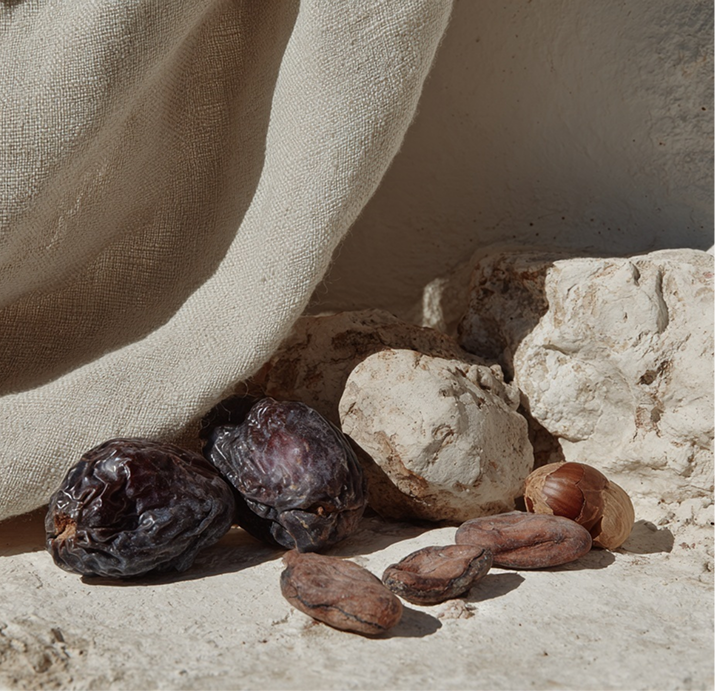
WE BELIEVE TRACEABILITY SHOULD BE REAL, NOT VAGUE. THAT IS WHY ERAVA IS BUILDING DIGITAL PRODUCT PASSPORTS WITH RENOON, DESIGNED TO GIVE YOU DEEPER
(1)
FARM AND ORIGIN DETAILS
(2)
VARIETY, PROCESSING, AND HARVEST CONTEXT
(3)
SUPPLY CHAIN TRANSPARENCY
(4)
REGENERATIVE PRACTICES AND VERIFICATION SIGNALS
(5)
SOIL HEALTH DOCUMENTATION,
WHERE AVAILABLE

OUR GOAL IS SIMPLE YOU SHOULD BE ABLE TO UNDERSTAND WHAT YOU ARE DRINKING, WHERE IT
CAME FROM, AND WHY IT TASTES THE WAY IT DOES.
WHY ORGANIC
FARMING IS NOT
ENOUGH
ORGANIC CERTIFICATION IS A MEANINGFUL STEP FORWARD BECAUSE IT RESTRICTS THE USE OF MANY SYNTHETIC FERTILIZERS AND PESTICIDES. BUT TECHNICALLY, ORGANIC IS PRIMARILY A PROCESS-BASED STANDARD, NOT AN OUTCOME-BASED ECOLOGICAL PERFORMANCE STANDARD.
IN OTHER WORDS, A FARM CAN BE "CERTIFIED ORGANIC" WHILE STILL DEGRADING SOIL STRUCTURE, LOSING CARBON, AND REDUCING BIODIVERSITY: THE STANDARD IS LARGELY BUILT ON INPUT COMPLIANCE RATHER THAN MEASURED BIOLOGICAL FUNCTION.
ORGANIC CERTIFICATION IS A MEANINGFUL STEP FORWARD BECAUSE IT RESTRICTS THE USE OF MANY SYNTHETIC FERTILIZERS AND PESTICIDES. BUT TECHNICALLY, ORGANIC IS PRIMARILY A PROCESS-BASED STANDARD, NOT AN OUTCOME-BASED ECOLOGICAL PERFORMANCE STANDARD.
IN OTHER WORDS, A FARM CAN BE "CERTIFIED ORGANIC" WHILE STILL DEGRADING SOIL.
WHY ORGANIC FARMING IS NOT ENOUGH
A TECHNICAL CRITIQUE
Organic certification is a meaningful step forward because it restricts the use of many synthetic fertilizers and pesticides. But technically, organic is primarily a process-based standard, not an outcome-based ecological performance standard.
In other words, a farm can be “certified organic” while still degrading soil structure, losing carbon, and reducing biodiversity; the standard is largely built on input compliance rather than measured biological function.Organic certification is a meaningful step forward because it restricts the use of many synthetic fertilizers and pesticides. But technically, organic is primarily a process-based standard, not an outcome-based ecological performance standard.
In other words, a farm can be “certified organic” while still degrading soil structure, losing carbon, and reducing biodiversity; the standard is largely built on input compliance rather than measured biological function.
Organic is Input Substitution, Not Systems Redesign
Across both USDA (NOP) and EU (Regulation 2018/848) frameworks, the operating logic remains: identify a problem → apply an allowed input. The "allowed inputs" simply change. Whether it's the USDA National List or the European Input List ecosystem, the mental model stays the same. Organic often functions as “conventional farming with different products,” rather than a full redesign around ecology, nutrient cycling, and plant physiology.
The Barrier of "Compliance Laziness"
Why is the system designed this way? Because input logs are easy to audit. Checking a receipt for an OMRI-listed fertilizer is a simple box-ticking exercise for a government inspector.
However, this reliance on paperwork over performance is a form of regulatory laziness. There is a common myth that deep soil testing and biological monitoring are "too expensive" to be mandatory. In reality, modern soil testing and sap analysis are remarkably affordable. The true "cost" is not the lab fee; it is the intellectual labor required to gather data, analyze the results, and execute a high-precision plan. The current system rewards the path of least resistance, which is often manipulated by "Big Ag" interests to keep farmers dependent on pre-packaged, "approved" inputs rather than their own agronomic intelligence.
The Missing Requirement: Measured Biological Function
Organic standards do not typically require farms to demonstrate improvement in soil aggregation, microbial biomass, or real-time plant mineral balance. To move beyond the "lazy audit," farmers must utilize sophisticated testing that provides proof of performance.
Implementing PLFA (Phospholipid Fatty Acid) analysis and comprehensive carbon analysis, such as the Eurofins Soil Health suite, provides the only true baseline for a farm's trajectory. These tests identify whether you are depleting the soil, maintaining soil health, or actively improving it each season. This data serves as the biological "receipt" that a simple organic certification ignores.
To see the microscopic life that these tests measure in action, I highly recommend exploring the work of Dr. Elaine Ingham and the Soil Food Web School. You can observe the actual microscopy of these organisms, which illustrates the difference between "dirt" and "living soil," through their YouTube channel here.
The Nitrogen Paradox and Structural Dependency
Modern agriculture is built on a repeatable business model: inputs in, symptoms out, more inputs to manage symptoms.
Even in organic systems, the Nitrogen Paradox applies. High applications of organic nitrogen can shut down the plant’s relationship with mycorrhizal fungi, much like synthetic nitrogen does. Furthermore, organic fertilizers with low Carbon-to-Nitrogen (C:N) ratios can over-stimulate bacterial activity to the point that they "burn" through stable soil carbon.
Breaking the Loop: Biological Completion + Plant Physiology
The pathway beyond organic is outcome-driven regenerative agronomy, where inputs are secondary to function:
The Role of Plant Secondary Metabolites (PSMs)
When a plant achieves true mineral balance and symbiotic microbial support, it produces complex Secondary Metabolites (terpenes, alkaloids, phenolics). These compounds are the plant's natural defense system.
This highlights the fundamental choice in modern farming: you can keep buying chemicals to solve your problems, or you can address the imbalances in your biology. A "biologically complete" plant is not just "organic," it is chemically unappealing to pests and resilient to disease. By addressing the root physiological cause rather than the symptom, you eliminate the need for "rescue chemicals" entirely.
Bottom Line
Organic is an important baseline, but it is not a guarantee of ecological performance. If the goal is superior yield and resilience, the standard must evolve from input compliance to measured biological outcomes. We must move past the "lazy audit" and embrace the intellectual labor required to work with, rather than just substitute for, the biology of the soil.
RESEARCH & PROFF
These are credible sources you can link to as supporting education, without turning the main page into a science paper.
Shade-Grown Coffee Supports More Biodiversity
Coffee farms with higher shade levels tend to support significantly higher species diversity than low shade or sun-grown systems, especially for insects, birds, mammals, and epiphytes.
Effect of shade on biodiversity within coffee farms: A meta-analysis (Science of the Total Environment, 2024)
https://www.sciencedirect.com/science/article/pii/S0048969724000160
Shade trees preserve avian insectivore biodiversity on coffee farms (Ecology and Evolution, 2020)
https://onlinelibrary.wiley.com/doi/full/10.1002/ece3.6879
Organic Amendments Support Soil Microbial Biomass and Diversity
Meta-analyses show that organic fertilization strategies can increase microbial biomass and influence soil microbial diversity compared with mineral-only fertilization.
A meta-analysis of the effect of organic and mineral fertilizers on soil microbial diversity (Applied Soil Ecology, 2022)
https://www.sciencedirect.com/science/article/pii/S092913932200066X
(doi) https://doi.org/10.1016/j.apsoil.2022.104450
Meta-analysis: Organic fertilization effects on soil bacterial diversity and community composition (open access, PMC, 2023)
https://pmc.ncbi.nlm.nih.gov/articles/PMC10675672/
Manure and Organic Inputs Increase Soil Microbial Biomass
Large-scale analyses report that manure application can increase soil microbial biomass and influence bacterial diversity, highlighting how biology responds to carbon and organic matter inputs.
A global meta-analysis of animal manure application and soil microbial properties (PLOS ONE, 2022)
https://journals.plos.org/plosone/article?id=10.1371/journal.pone.0262139
Open access full text mirror (PMC)
https://pmc.ncbi.nlm.nih.gov/articles/PMC8782357/
Cover Crops Can Increase Soil Carbon Over Time
Meta-analysis work suggests cover crops can contribute to higher soil organic carbon, helping explain why diversified systems often improve soil function and resilience.
Cover crops do increase soil organic carbon stocks, a critical review and meta perspective (Global Change Biology, 2024)
https://onlinelibrary.wiley.com/doi/10.1111/gcb.17128
PubMed entry (same paper, easy to cite)
https://pubmed.ncbi.nlm.nih.gov/37638821/
Meta-analysis protocol: effects of cover crops on SOC pools (ScienceDirect, 2023)
https://www.sciencedirect.com/science/article/pii/S2215016123004077
No Till Has Benefits, But Context Matters
Meta-analysis research on no till shows results can vary by context, which is why we focus on whole systems design rather than single-tactic farming.
When does no-till yield more? A global meta-analysis (Field Crops Research, 2015)
https://www.sciencedirect.com/science/article/pii/S0378429015300228
Evaluating soil organic carbon stock changes under no-tillage using fixed depth vs equivalent soil mass (Agriculture, Ecosystems & Environment, 2020)
https://www.sciencedirect.com/science/article/abs/pii/S0167880920301675
(doi) https://linkinghub.elsevier.com/retrieve/pii/S0167880920301675
Global meta-analysis: no-tillage favourably changes soil functional properties (Geoderma, 2022)
Global meta-analysis suggests that no-tillage favourably changes soil structure and porosity - ScienceDirect
RECOMMENDED WATCHING AND READING
If you want to go deeper, these are some of the most influential documentaries and books that shaped how we think about soil, regeneration, and the role of craft in everyday life. None of this is required to enjoy Erava, but if you’re curious, it’s a beautiful rabbit hole.
Watch
Kiss the Ground
A hopeful introduction to soil regeneration, food systems, and why biology matters.
https://kissthegroundmovie.com/
Common Ground
A continuation of the conversation, focused on real world outcomes and the people working to change the system.
https://commongroundfilm.org/
The Biggest Little Farm
A beautifully filmed story of building a living farm ecosystem through patience, complexity, and nature’s feedback loops.
https://www.apricotlanefarms.com/biggestlittlefarm/
Roots So Deep (You Can See the Devil Down There)
A powerful exploration of adaptive grazing, soil function, and what changes when systems are managed differently.
https://rootssodeep.org/
The Need to GROW
A practical film connecting soil degradation, food security, and a more resilient future.
https://www.theneedtogrow.com/
Inhabit: A Permaculture Perspective
A thoughtful look at permaculture as a design lens for building resilient natural systems.
https://inhabitfilm.com/
Fantastic Fungi
A stunning look at fungi and mycelium networks, the hidden biology beneath everything.
https://fantasticfungi.com/
A Film About Coffee A love letter to specialty coffee, the producers behind it, and the craft culture that shaped modern coffee.
https://www.afilmabout.coffee/
https://vimeo.com/ondemand/afilmaboutcoffee
Read, Soil and Regeneration
For the Love of Soil, Nicole Masters
Practical, systems focused, and grounded in real farm case studies.
https://integritysoils.com/products/for-the-love-of-soil-strategies-to-regenerate-our-food-production-systems
Dirt to Soil, Gabe Brown
A firsthand story of rebuilding land through core soil principles, with real decisions and long term results.
https://www.chelseagreen.com/product/dirt-to-soil/
The Soil Will Save Us, Kristin Ohlson
A compelling narrative on soil carbon, microbial life, and resilience.
https://www.kristinohlson.com/books/soil-will-save-us
Growing a Revolution, David R. Montgomery
A global view of farmers restoring soil function, with practices that can scale.
https://wwnorton.com/books/9780393356090
The Hidden Half of Nature, David R. Montgomery and Anne Biklé
A beautifully written look at microbes as the foundation of plant health and ecosystem performance.
https://www.amazon.com/Hidden-Half-Nature-Microbial-Health/dp/0393353370
Teaming with Microbes, Jeff Lowenfels and Wayne Lewis
A clear foundation of Soil Food Web principles, written for real world application.
https://www.amazon.com/Teaming-Microbes-Organic-Gardeners-Revised/dp/1604691131
Restoration Agriculture, Mark Shepard
A blueprint for agriculture modeled on ecosystems, perennials, and resilience through design.
https://www.amazon.com/Restoration-Agriculture-Real-World-Permaculture-Farmers/dp/B08ZDGRCGS
The Carbon Farming Solution, Eric Toensmeier
A toolkit of regenerative strategies with a focus on long term restoration.
https://www.chelseagreen.com/product/the-carbon-farming-solution/
The One Straw Revolution, Masanobu Fukuoka
A timeless philosophy of working with nature through restraint, observation, and balance.
https://www.amazon.co.uk/One-Straw-Revolution-Review-Books-Classics/dp/1590173139
Braiding Sweetgrass, Robin Wall Kimmerer
A modern classic on reciprocity and relationship with living systems, poetic and grounded.
https://milkweed.org/book/braiding-sweetgrass
Folks, This Ain’t Normal, Joel Salatin
A sharp, energetic lens on food systems and why the way we farm shapes everything downstream.
https://polyfaceshop.com/FOLKS-THIS-AINT-NORMAL-p171059405
Read, Coffee and Craft
The World Atlas of Coffee, James Hoffmann
An elegant guide to origin, processing, roasting, and why coffee tastes the way it does.
https://www.amazon.fr/World-Atlas-Coffee-explored-explained/dp/1845337875
Craft Coffee, Jessica Easto
A welcoming guide to brewing better at home without making it feel overly technical.
https://www.jessicaeasto.com/craft-coffee-a-manual
The Coffee Roaster’s Companion, Scott Rao
A deeper reference on roasting fundamentals for those who love the behind the scenes side of coffee.
https://www.scottrao.com/products/coffee-roasters-companion
Uncommon Grounds, Mark Pendergrast
A wide lens history of coffee, culture, trade, and how the modern coffee world was built.
https://www.goodreads.com/book/show/8598379-uncommon-grounds